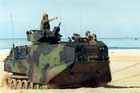
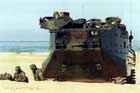
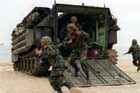
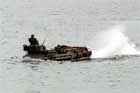
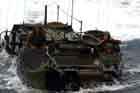
Description:
The
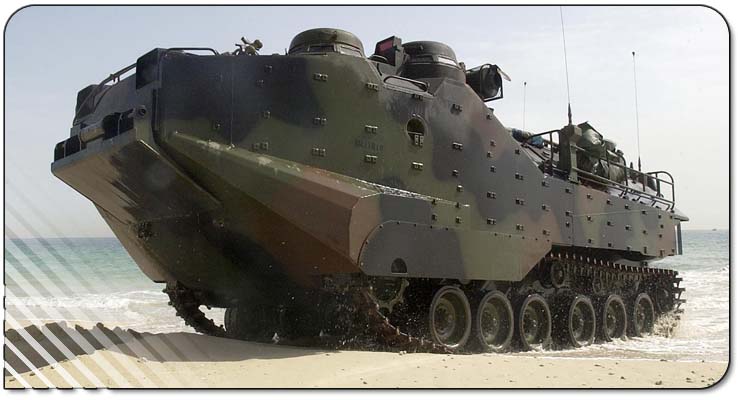
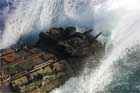
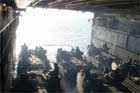
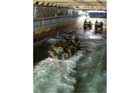
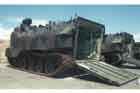
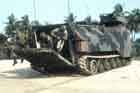
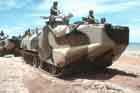
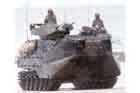
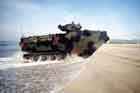
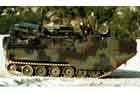
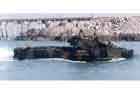
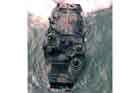
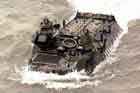
AAVP7A1 is an armored assault amphibious full-tracked landing vehicle.
The vehicle carries troops in water operations from ship to shore,
through rough water and surf zone. It also carries troops to inland
objectives after ashore.
Features:
UNAVAILABLE
Background:
The AAVP7A1 is the newest Assault Amphibian in a series that started
with the Roebling ALLIGATOR. The Alligator was developed over a period
of 7 years, starting in 1932. The first "Gators" were a disappointment,
in that the water speed was only 2.5 mph. The land speed was 25 mph.
Through design changes, and by using larger engines, the water speed of
the Alligator was increased to 8.6 mph by 1939. In 1940, Roebling built
a new model which was designated the CROCODILE. The Crocodile had a
land speed of 25 mph and a water speed of 9.4 mph.
The LVT-1
was a direct copy of the Crocodile, except that it was fabricated from
sheet steel instead of aluminum. The LVT-1 was in production from 1941
to 1943. Being heavier, the land speed of the LVT-1 was 18 mph and the
water speed was 7 mph. A 6-cylinder, 146 hp Hercules engine was used
for power. The LVT-1 was propelled by two endless chains fitted with
cleats, both in the water and on land. The first LVT-1's were used as
logistic support vehicles only. They were not armored and carried no
armament, however, this soon changed. At the Battle of Tarawa, bolted
on armor plate was used and the vehicles were equipped with one to four
30 cal. machine guns.
The second
generation of LVT's was the LVT-2. This vehicle was developed in 1941
and was in production from 1942 to 1945. The LVT-2 was the basic design
for a series of vehicles used during WW II. This family of vehicles
included the: LVTA1, LVTA2, LVT4, LVTA4, and LVTA5. A few of the LVTA5s
were modified in 1949 and continued in service until the mid 1950s.
These vehicles were powered with 7-cylinder radial aircraft engines
built by Continental Motors. These engines developed 220hp, their
service life was very short. Major overhaul was scheduled for 100
hours, however few ever lasted that long. The transmission was a 5
speed, manual shift SPICER that incorporated a manually operated steer
differential. This transmission had been developed for the M-3 light
tank. As a result, the transmission was too narrow for the LVT. This
problem was overcome by using four final drives. The internal finals
were bolted to the transmission / differential gear case and supported
by two mounting yokes. The external final drives were bolted to the
hull and powered the drive sprockets. This generation of LVTs was used
through the Okinawa campaign in 1945.
|
|