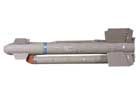
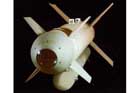
Description:
Mission: The
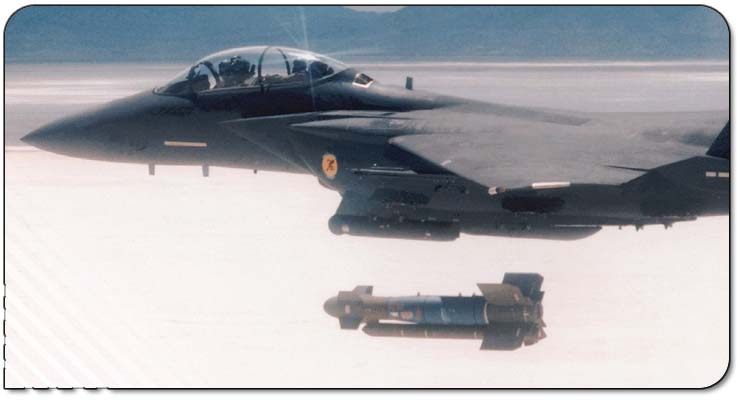
AGM-130 is a powered air-to-surface
missile
designed for high- and low-altitude strikes at standoff ranges against
a variety of targets.
Features: Carrying
forward the modular concept of the
GBU-15 guided weapon system, the AGM-130 employs a rocket motor for
extended range and an altimeter for altitude control. The AGM-130
provides a significantly increased standoff range than the GBU-15. The
AGM-130 has two variants, based on the warhead: the AGM-130A with a
MK-84 blast/fragmentation warhead and the AGM-130C with a BLU-109
penetrator.
The AGM-130 is equipped with either a television or an imaging infrared
seeker and data link. The seeker provides the launch aircraft a visual
presentation of the target as seen from the weapon. During free flight
this presentation is transmitted by the AXQ-14 data-link system to the
aircraft cockpit monitor.
The seeker can be either locked onto the target before or after launch
for automatic weapon guidance, or it can be manually steered by a
weapon systems officer. Manual steering is performed through the
two-way data link.
The AGM-130 is designed for use in the F-15E aircraft. The development
of the AGM-130 was initiated in 1984 as a product improvement to the
GBU-15 guided glide bomb system. In the mid-1990s, the AGM-130 weapon
system received a significant modification upgrade when Global
Positioning System and inertial navigation systems guidance
capabilities were added. This combined enhancement provided the AGM-130
weapon system with an adverse weather capability.
Background: For the
primary mode of operation, the
aircraft
flies to a pre-briefed launch position. The survivability of aircraft
and crew is enhanced by launching the weapon at low altitude and from a
significant standoff range, thus avoiding detection by enemy air
defenses. After launch, the weapon flies through glide-powered-glide
phases toward the target area with midcourse guidance updates provided
by global positioning system navigational information or by the weapon
systems officer through the data link.
Upon termination of the powered flight phase the rocket motor is
ejected. As the target comes into view, the weapon systems officer has
dual flexibility in guiding the weapon via the data link. For automatic
terminal homing, the guidance tracker is locked on target but can be
manually updated for precision bombing. When total manual guidance is
used, the operator manually steers the weapon to the target. For those
aircraft not equipped with a data-link pod, the weapon may be launched
in a direct attack mode. |
|